Surviving A Week at The Real Conjuring House
By Sam and Colby on YouTube
The Complete Guide
Everything about the Old Arnold Estate in one place — its history, the Perron family, the 2013 film, restoration efforts, tours, and preservation.
The Conjuring House is the internationally recognized name for the historic Old Arnold Estate, a colonial farmhouse built in 1736 at 1677 Round Top Road in Harrisville — a village within the town of Burrillville, Rhode Island. This official guide explains the property’s history, the Perron family, the 2013 film, restoration efforts, tours, and preservation.
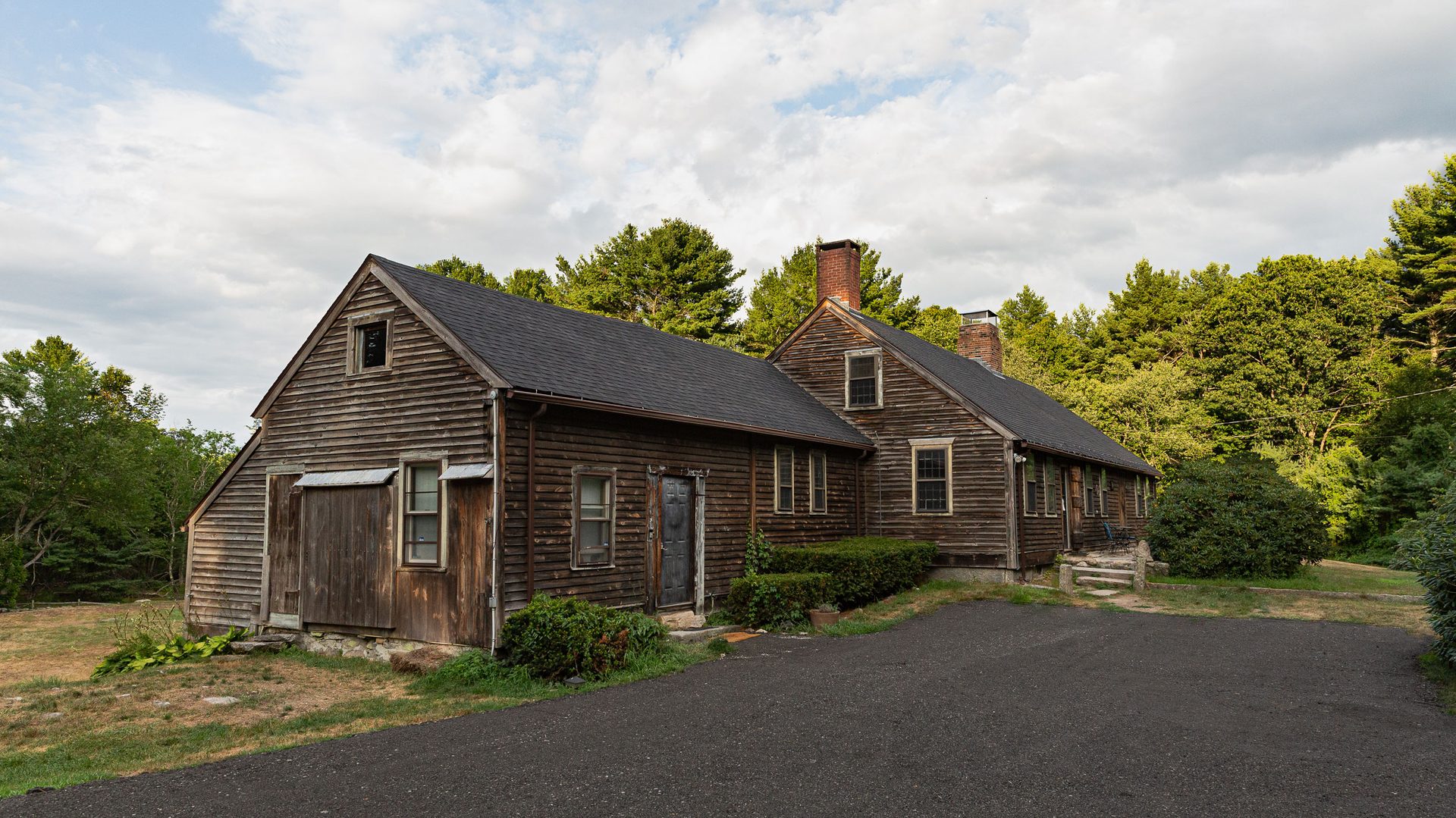
The Conjuring House is the real farmhouse that inspired the movie The Conjuring — the modern name for the Old Arnold Estate, a center-chimney colonial farmhouse built in 1736 in Harrisville, Rhode Island, a village within the town of Burrillville. Over nearly three centuries the property has carried several names — the Richardson Arnold House, the Arnold Estate, and locally, the Farm on Hilltop Road — before becoming known around the world by its modern name. For a closer look at the property as it exists today, including its architecture and grounds, see our About the House page.
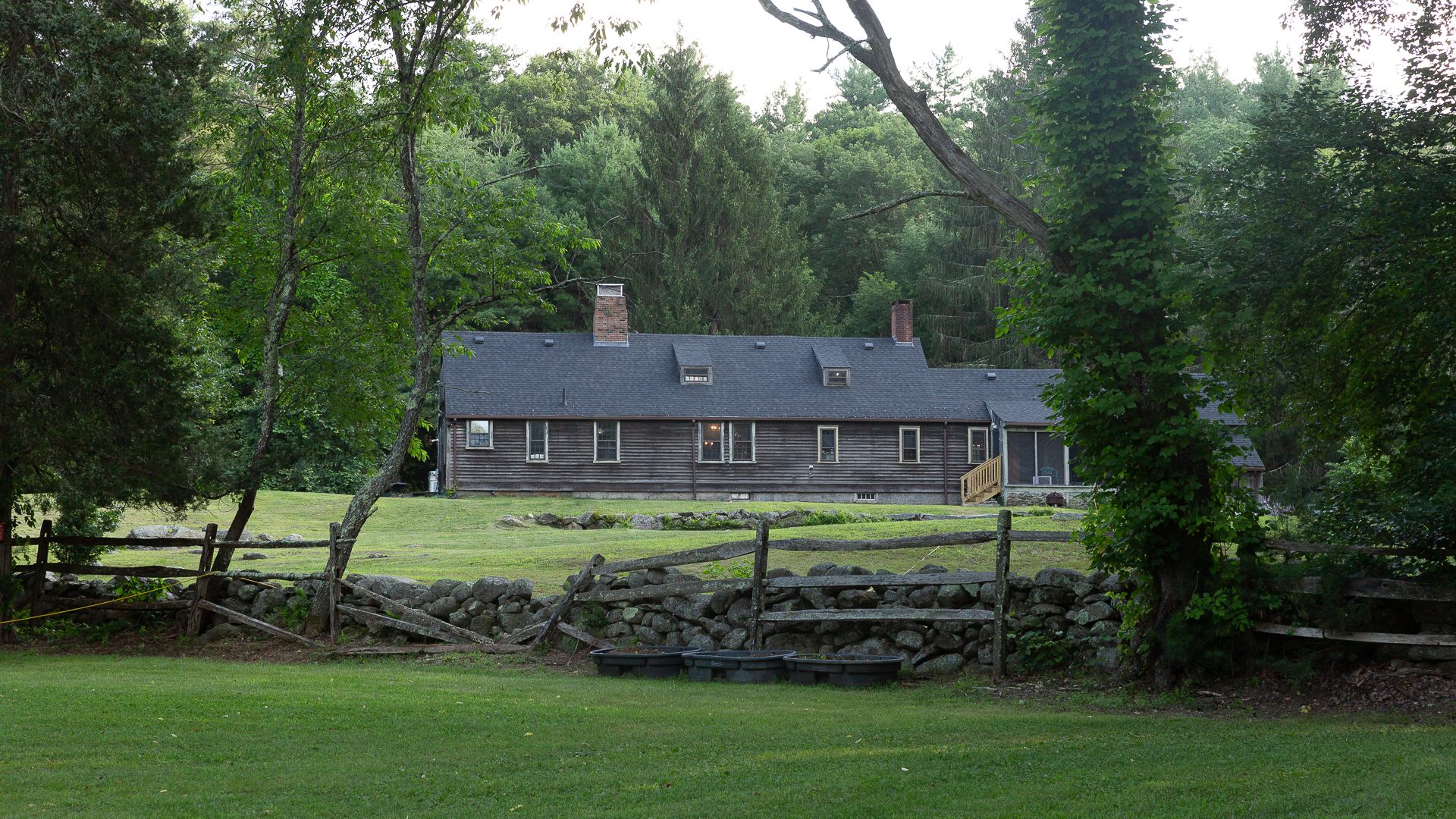
The farmhouse sits on nearly 9 acres bordered by stone walls, open fields, a river, and forest. It remains a private residence and a working historic property, not a museum or staged attraction. Guided tours are planned once the property is repaired — see Tours & Events for planned tour types and how to get notified.
The name “The Conjuring House” comes from the 2013 film The Conjuring, which dramatized paranormal experiences reported by the Perron family, who lived in the farmhouse during the 1970s. Today the property is privately held, with Jason Hawes — founder of TAPS (The Atlantic Paranormal Society) and Ghost Hunters — leading its preservation and public tour program. You can read the full account of how that came about on our History page.
Because the property predates the film by nearly 280 years, its identity is really twofold: a documented 18th-century Rhode Island farmhouse with its own architectural and family history, and the real-world house behind one of the most recognized haunted-house stories in modern pop culture. The sections below cover both halves of that story.
Architecturally, the house is a fairly typical example of an 18th-century Rhode Island farmhouse — a center-chimney layout, hand-hewn timber framing, wide-board flooring, and multiple period fireplaces, with later additions layered on across more than two centuries of continuous use. What sets it apart is how much of that original material has survived intact rather than being renovated away. Our About the House page walks through the architecture and interior room by room, with photography of the library, living room, and dining room fireplaces as they look today.
The property’s various names each reflect a different chapter of its history: “Richardson Arnold House” and “Old Arnold Estate” point back to the 18th-century families who built and farmed it, “The Farm on Hilltop Road” reflects its more recent local usage, and “The Conjuring House” reflects its 21st-century pop-culture recognition. All of them refer to the same physical farmhouse at 1677 Round Top Road in Harrisville, Rhode Island — this site uses “The Conjuring House” because it is how most visitors find us, while working to keep the documented, pre-film history equally visible throughout the site.
The property picked up the name “The Conjuring House” after the 2013 film The Conjuring dramatized paranormal experiences reported by the Perron family, who lived in the farmhouse during the 1970s. The film was based on their account, and once it became a hit, the public simply started calling the real house behind the story by the film’s title — even though the movie itself was not filmed here. Before that, the property was known as the Old Arnold Estate or the Richardson Arnold House, names that go back to the 18th-century families who built and farmed it. See the Movie section below for more on that distinction, and our History page for the property’s full documented timeline.
Two things intersect to make this property famous: a widely seen horror film, and a paranormal reputation that, by many accounts, predates that film by centuries. The Conjuring (2013) introduced millions of viewers to the Perron family’s story and, by extension, to the real farmhouse where they lived. See our dedicated Haunting page for the full paranormal history and reputation behind the property, including video coverage from some of the paranormal community’s best-known investigators and content creators.
The film’s success turned “The Conjuring House” into a phrase people search for by name, often assuming it refers to a filming location. It does not: the movie was shot elsewhere, and the real farmhouse in Harrisville is the inspiration, not the set. That distinction is one this official site exists specifically to clarify wherever it can.
Independent of the film, the property carries its own reputation, considered by many to be one of the most haunted houses in the world. Visitors, tour groups, and paranormal researchers have reported experiences on the grounds for generations, and local tradition connects the site’s paranormal past to native tribes historically tied to the land as far back as the 1700s. We separate documented history from folklore wherever we can, and our History page marks that distinction clearly throughout its timeline.
That combination — a real, centuries-old farmhouse, a Hollywood film based on a real family’s account, and an enduring paranormal reputation of its own — is why the property continues to draw visitors, media coverage, and content creators from around the world, and why guided tours remain the only way to experience it firsthand. See Tours & Events to plan a visit.
The Conjuring also proved successful enough to launch an entire film franchise built around Ed and Lorraine Warren’s reported case files, including spinoffs like Annabelle and The Nun. That franchise’s continued popularity has kept interest in the original story, and the real farmhouse behind it, steady for more than a decade rather than fading after a single release. It’s a large part of why the property still draws first-time visitors from around the world, well over ten years after the film debuted.
Media coverage has followed the same pattern: journalists, podcasters, and paranormal content creators regularly reach out for interviews, fact-checking, and on-site filming requests. Credentialed media can find contact details, quick facts, and property photography on our Media page, and a growing library of visitor-produced video coverage is featured on our Haunting page and in the Videos section below.
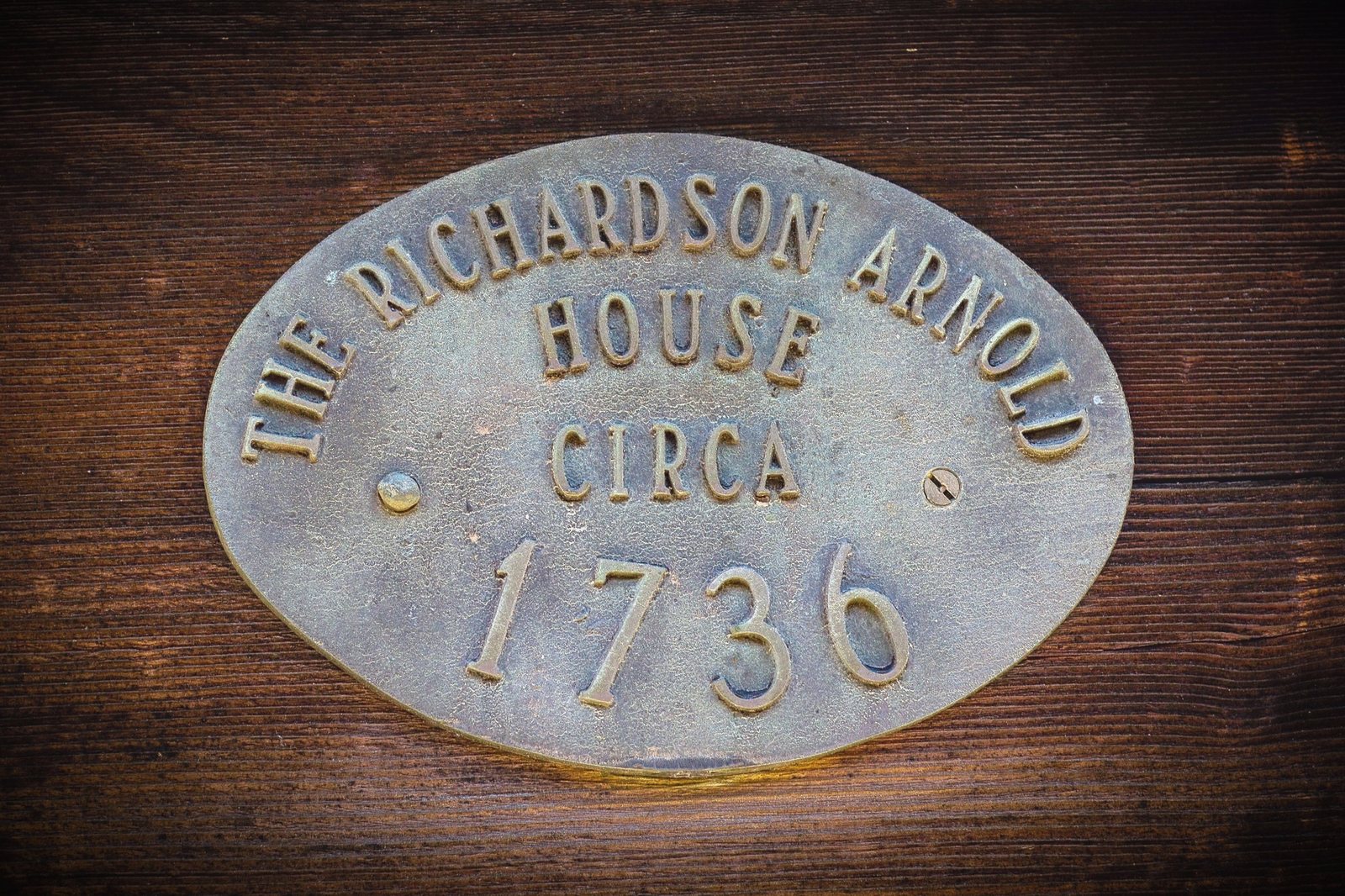
The farmhouse standing today was built in 1736 in the center-chimney style common to colonial New England, and a period plaque mounted on the house reads “The Richardson Arnold House, Circa 1736,” reflecting the two families whose histories are intertwined on this land. Our full History page covers this documented timeline in depth, including a dedicated section on the Richardson-Arnold family genealogy; the summary below hits the highlights.
Genealogical research traces the Richardson line in New England back to Isaac Richardson, born in 1643 in Woburn, Massachusetts, whose descendants had settled in Glocester, Rhode Island, by the early 1700s. On November 20, 1762, Joseph and Isaac Richardson sold fifty acres — including the farmhouse and land that make up the property today — to Noah Arnold Sr., formally beginning the Arnold family’s ownership. The two families were also linked by marriage: Anne Richardson married Noah Arnold Jr. in 1768.
Arnold family ownership continued through several generations who lived on and farmed the land, including John Arnold, who died in 1837, and his son Stephen Arnold, who died in 1849. Stephen’s son Edwin Arnold, born February 28, 1821, remained on the property until his disappearance on October 24, 1903; his body was found six weeks later on a neighboring farm, as reported at the time by the local Pascoag Herald. Two markers on the grounds today directly support this documented history: the Richardson Arnold House plaque, and period headstones in the small family cemetery on the property, both discussed further on the History page.
Ownership continued to pass through several more families across the early-to-mid 20th century, a stretch of the property’s history that is less thoroughly documented in public records than the 18th and 19th centuries. It’s during this same long stretch that much of the property’s local oral tradition took shape, as is common with old New England farmhouses passed between owners over generations. This site draws a clear line between that documented ownership history and the folklore layered on top of it wherever the two diverge — a distinction our History page maintains throughout its timeline, and one that becomes especially important once the property’s more recent paranormal reputation enters the picture, covered in depth on our Haunting page.
That reputation, and the farmhouse’s modern name, both trace back to the property’s next well-documented chapter: the Perron family’s residence there in the 1970s, discussed in the next section below. In the decades after the Perron family moved on, and after the film that introduced the property to the world, ownership changed hands again. In the 2020s, as the farmhouse’s long-term future came into question, Jason Hawes helped unite supporters from the paranormal research community and historic preservation advocates around a single goal: keeping the house standing, protected, and open to the public. That effort led directly to Jason Hawes securing ownership interests in the property, with the transaction still being finalized, and his team now leads its preservation and tour program — see our Preservation Mission page for details.
The Perron family lived in the farmhouse during the 1970s, and their reported experiences there are the reason the property is known today as The Conjuring House. Their account — most widely shared through the writing of Andrea Perron, one of the family’s daughters — describes a range of paranormal activity during their time on the property, and it’s that account, rather than any single dramatic event, that forms the basis for the film discussed in the next section.
This site maintains a photograph connecting the Perron family to the property as part of its documented recent history, shown on our History page. Andrea Perron has also visited the farmhouse in the years since, and the property’s current caretakers regard the family’s account as an important, if inherently personal, part of the house’s story — one this site presents in the context of the physical property, independent of the film itself.
Andrea Perron went on to publish her own written account of the family’s time in the farmhouse as a memoir trilogy, giving the public a far more detailed version of events than any single film could cover. That written account, rather than the movie, is generally regarded as the more complete record of what the family says they experienced, and it’s worth reading directly for anyone who wants the fuller story beyond what a two-hour film can dramatize.
The Perron family no longer lives on the property, and this site has no ability to speak on their behalf beyond what has already been publicly shared. Our role, as the property’s current caretakers, is to preserve the physical farmhouse they lived in and to present its documented history — including their time here — accurately and respectfully alongside the centuries of history that came before them.
It’s worth separating three distinct things that often get blurred together: the Perron family’s own reported experiences in the 1970s; the broader paranormal reputation of the property that, by local tradition, reaches back centuries before the Perrons ever moved in (see The Haunting for more); and the 2013 film, which dramatized and, in places, fictionalized the family’s account for the screen. All three are connected, but they are not the same story.
The Conjuring, released in 2013, dramatizes the Perron family’s reported experiences in the farmhouse during the 1970s, framed around the real-life paranormal investigators Ed and Lorraine Warren. The film was a major commercial success and went on to spawn an extended cinematic universe, cementing “The Conjuring House” as the name most people now use for the Old Arnold Estate.
One point this official site is careful to clarify: the film was not shot on location at the real farmhouse. Like most major studio productions, it was filmed on sets and at other locations built or dressed to resemble the story’s setting. The real property in Harrisville, Rhode Island is the house that inspired the story, not a filming location, and it was not used by the production in any capacity.
That distinction matters for visitors: a guided tour of the real Old Arnold Estate (see Tours & Events) is a chance to see the documented, centuries-old farmhouse and hear its real history, not to see a movie set. It also matters for accuracy — this site is independently owned and operated, and is not affiliated with, endorsed by, or sponsored by Warner Bros., New Line Cinema, or any film production company. Our FAQ page addresses this and other common points of confusion directly.
The film also took some dramatic license with the story it was based on, as is standard for based-on-true-events horror films. Names, timelines, and specific events were adjusted for pacing and screen time, and the version of events shown on screen should not be treated as a documentary record of what happened on the property. For that reason, this site treats the film as the cultural event that made the property famous, not as a historical source — our History page relies on land records, period documentation, and the family’s own published accounts instead.
None of that diminishes why the film matters here: it’s the single biggest reason people around the world know this farmhouse by name at all, and it’s the reason thousands of visitors now make the trip to Harrisville, Rhode Island every year to see the real property for themselves.
As the farmhouse’s long-term future came into question in recent years, Jason Hawes helped bring together supporters from the paranormal research community and from historic preservation advocates with no connection to the paranormal field at all, uniting a worldwide following around keeping the Richardson Arnold House standing, protected, and open to the public rather than lost. That shared effort led directly to Jason Hawes securing ownership interests in the property, with the transaction still being finalized.
With that groundwork in place, restoration work has focused on a few concrete priorities: structural stabilization of the original timber frame, foundation, and roof to prevent long-term deterioration; upkeep of the grounds and outbuildings, including the barn, fields, and family cemetery; and ongoing historical documentation to keep the property’s recorded history accurate and well-sourced. Our Preservation Mission page covers each of these in more detail, including current priorities.
Because the property receives no public grant or institutional endowment, this restoration work is funded primarily through guided tours and direct visitor support — meaning every booked tour and every contribution goes directly toward keeping the house standing. See our Support page for ways to help, or Shop Our Store for official merchandise that also supports the mission.
Restoring an occupied 18th-century farmhouse comes with real constraints that a museum property doesn’t face: the house has to remain livable and safe for tours while original material is stabilized rather than replaced, work has to be scheduled around New England weather that is especially hard on a nearly 300-year-old timber frame, and every change has to weigh historical accuracy against modern safety and accessibility needs. That’s part of why restoration here is treated as an ongoing mission rather than a single project with a fixed end date.
Transparency is part of that mission, too. Visitors and supporters are welcome to ask about current restoration progress directly through our Contact page, and updates on major milestones are shared as they happen. If you have historic preservation, structural engineering, or restoration carpentry expertise and want to contribute more than a visit, that same Contact page is the right place to reach the team.
The Old Arnold Estate is not currently open for public tours while restoration work is underway. Guided tours are planned once that work is complete, and will be exclusively guided — there is no walk-up or self-guided access planned. Planned options include a Daytime History Tour focused on the documented history and architecture of the farmhouse, an Evening Property & Investigation Tour that also covers the property’s folklore with a supervised investigation experience in select rooms, and limited Extended & Overnight Visits for small groups by special arrangement.
Tours will be led by staff familiar with the property’s history, kept to small group sizes, and are planned to run 60–90 minutes, covering both the farmhouse interior and portions of the grounds, weather permitting. Because this is a working historic property and not a staged attraction, guests will be asked to follow staff instructions and treat the house as they would any historic home. Full details on planned tour types, policies, and accessibility are on our Tours & Events page.
Personal photography is expected to be generally permitted once tours open; commercial and press photography or filming inquiries can be arranged in advance through our Media page. To be notified when tours open, reach out through our Contact page.
Because the house is an 18th-century structure rather than a modern building, it has uneven original flooring, narrow stairways, and low doorways that limit accessibility in places; comfortable, sturdy footwear will be recommended for every tour, and guests with specific accessibility needs are encouraged to contact us for guidance once tours open. Extended tour hours and special programming are being planned for the fall once tours open — check our Tours & Events page for updates.
Once tours open, every booked visit will do double duty: it will be a chance to see a real, documented 18th-century farmhouse in person, while directly funding the restoration and preservation work described in the sections above. There will be no separate donation required to support the property — visiting will itself be the primary way most people help.
Intact, documented farmhouses from 1736 are increasingly rare in Rhode Island, and original timber framing, early hardware, and period layout survive here in a way that few comparable properties in the region can match. Once lost, these details cannot be replicated — only maintained, which is the core of this property’s preservation mission: keeping the Old Arnold Estate structurally sound and historically intact while allowing the public to experience it responsibly through guided tours.
Current priorities, covered in full on our Preservation Mission page, include structural stabilization, care for the grounds and outbuildings, ongoing historical documentation, and building a guided tour program that will directly fund the rest of the work once it opens. Since the property receives no public grant or institutional endowment, visits and direct contributions from the public are what will keep the house standing.
If you have relevant historic preservation, research, or restoration expertise and want to contribute more directly, reach out through our Contact page. For everyone else, getting notified when tours open or supporting the mission financially are the most direct ways to help — see our Support page for details.
Preservation here is about more than one house. Farmhouses built before 1750 with this much original material intact are genuinely uncommon in Rhode Island, and every one lost to neglect, fire, or redevelopment is a permanent loss of the physical record of how people actually lived in colonial and early-American New England. Keeping the Old Arnold Estate standing preserves a specific, dated, documented example of that history — not a replica or a recreation — for historians, descendants of the families connected to it, and the general public alike.
That’s also why this site takes care to document the property’s history as accurately as possible, distinguishing documented fact from folklore, and welcoming corrections from local historians and descendants of the families connected to the property through our Contact page. Preservation of the physical structure and preservation of an accurate historical record go hand in hand.
The center-chimney farmhouse now known as The Conjuring House is built in Harrisville, Rhode Island.
Joseph and Isaac Richardson sell the property to Noah Arnold Sr.; Anne Richardson marries Noah Arnold Jr. in 1768, linking the two family lines named on the property’s historic plaque.
John Arnold (d. 1837), Stephen Arnold (d. 1849), and Edwin Arnold (b. 1821, d. 1903) live on and farm the land; ownership later passes through several more families.
The Perron family lives in the farmhouse and later shares their account of paranormal experiences on the property.
The film dramatizes the Perron family’s account, and the Old Arnold Estate becomes known worldwide as The Conjuring House — though the film itself was not shot here.
Jason Hawes unites paranormal and preservation communities to protect the property, leading to him securing ownership interests, with the transaction still being finalized.
Jason Hawes and his team maintain the property, lead restoration efforts, and plan to operate guided tours for the public once the property is repaired.
This is a condensed overview. See our full History page for the complete documented timeline and family genealogy.
A selection of real photography of the property, inside and out. Additional galleries are available on our About the House and Media pages, including high-resolution images for credentialed press.
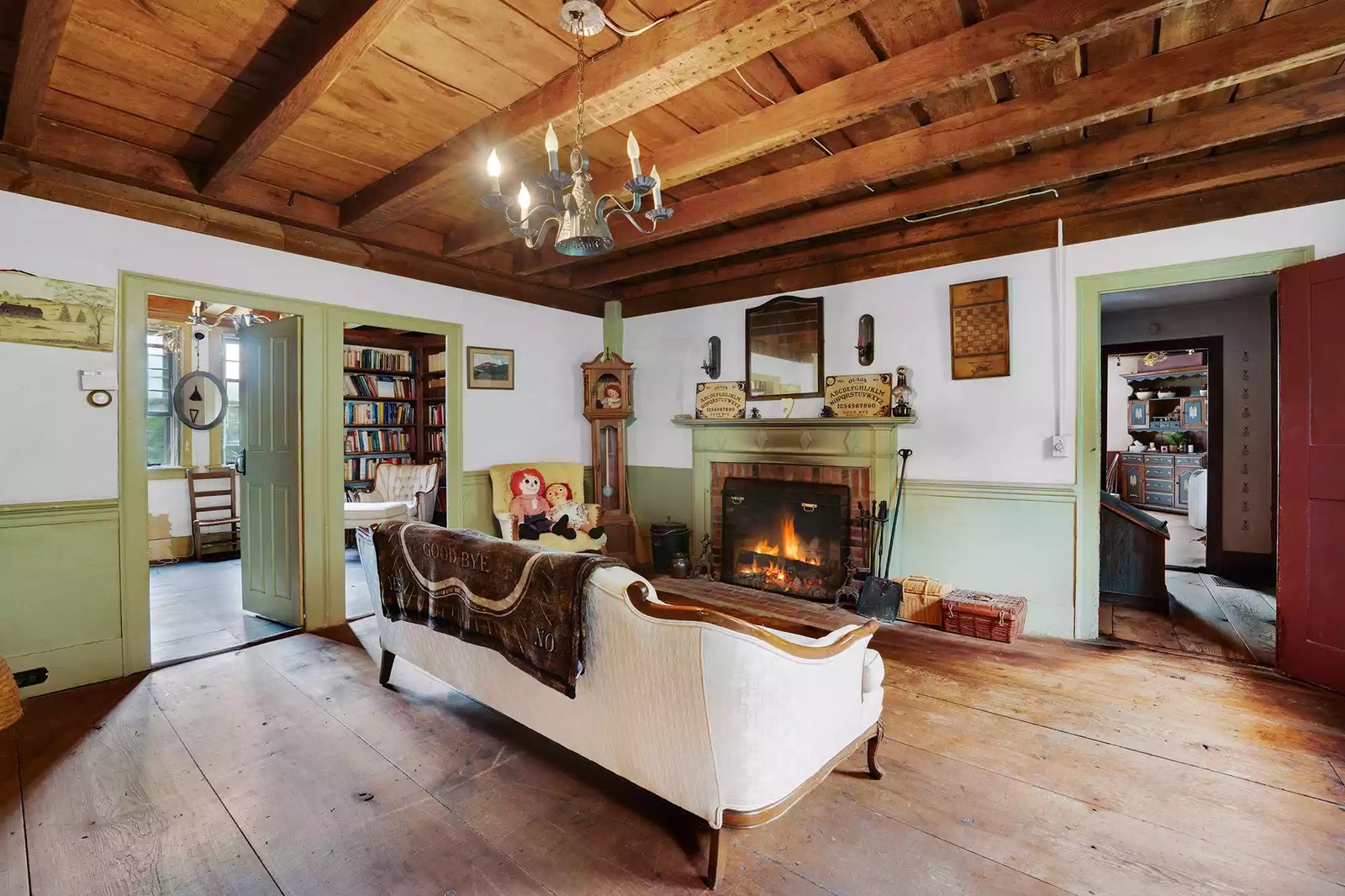
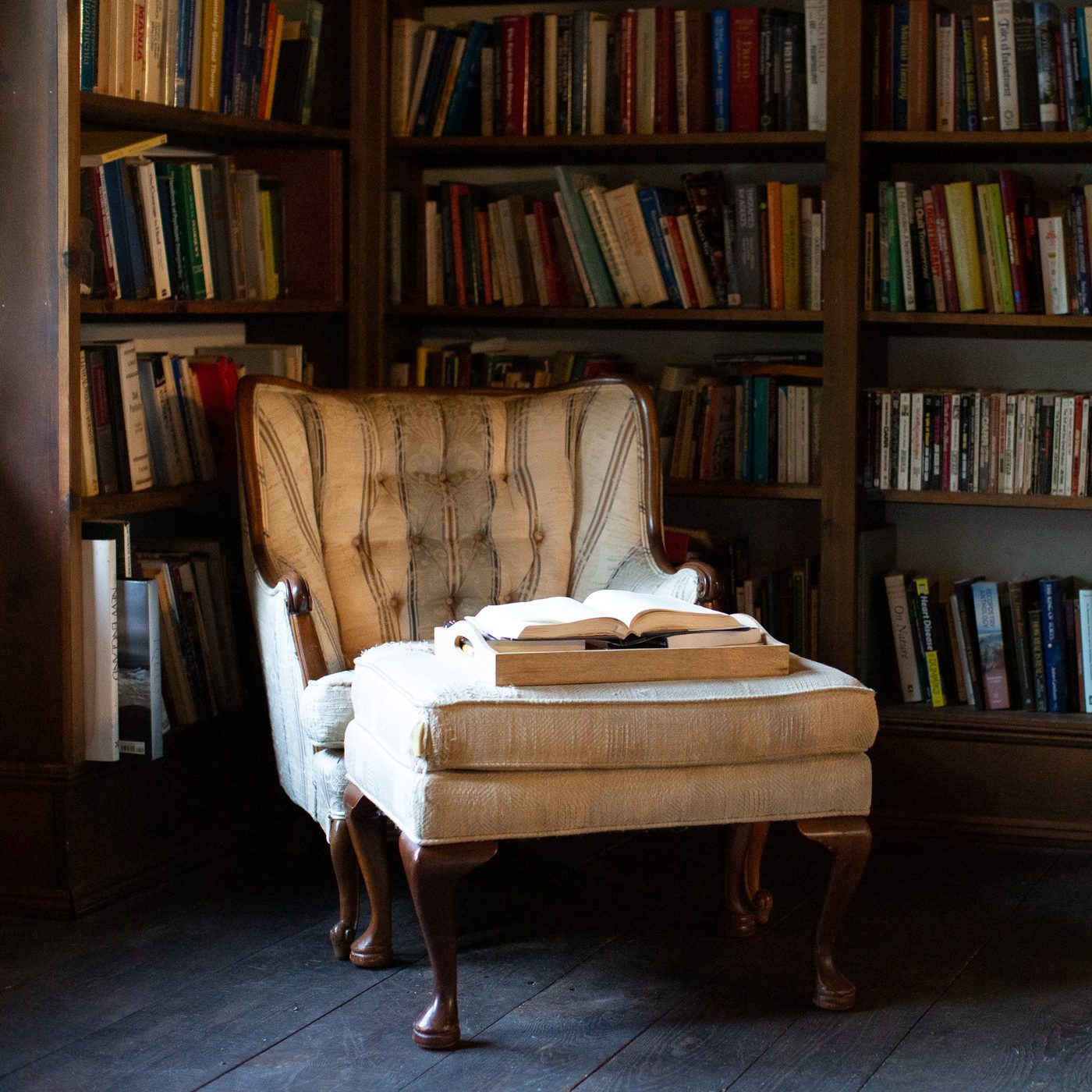
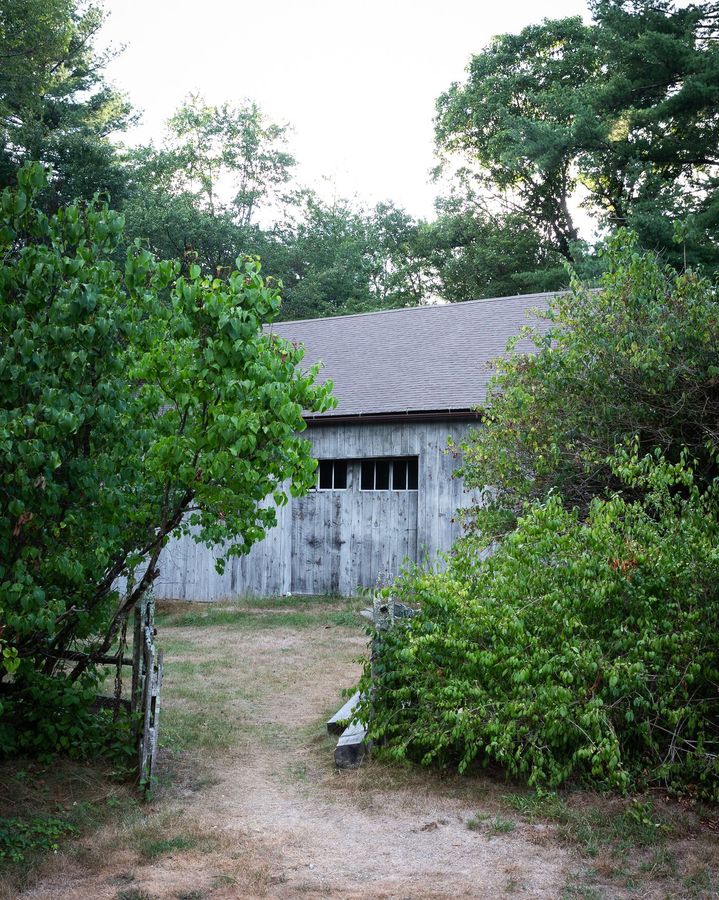
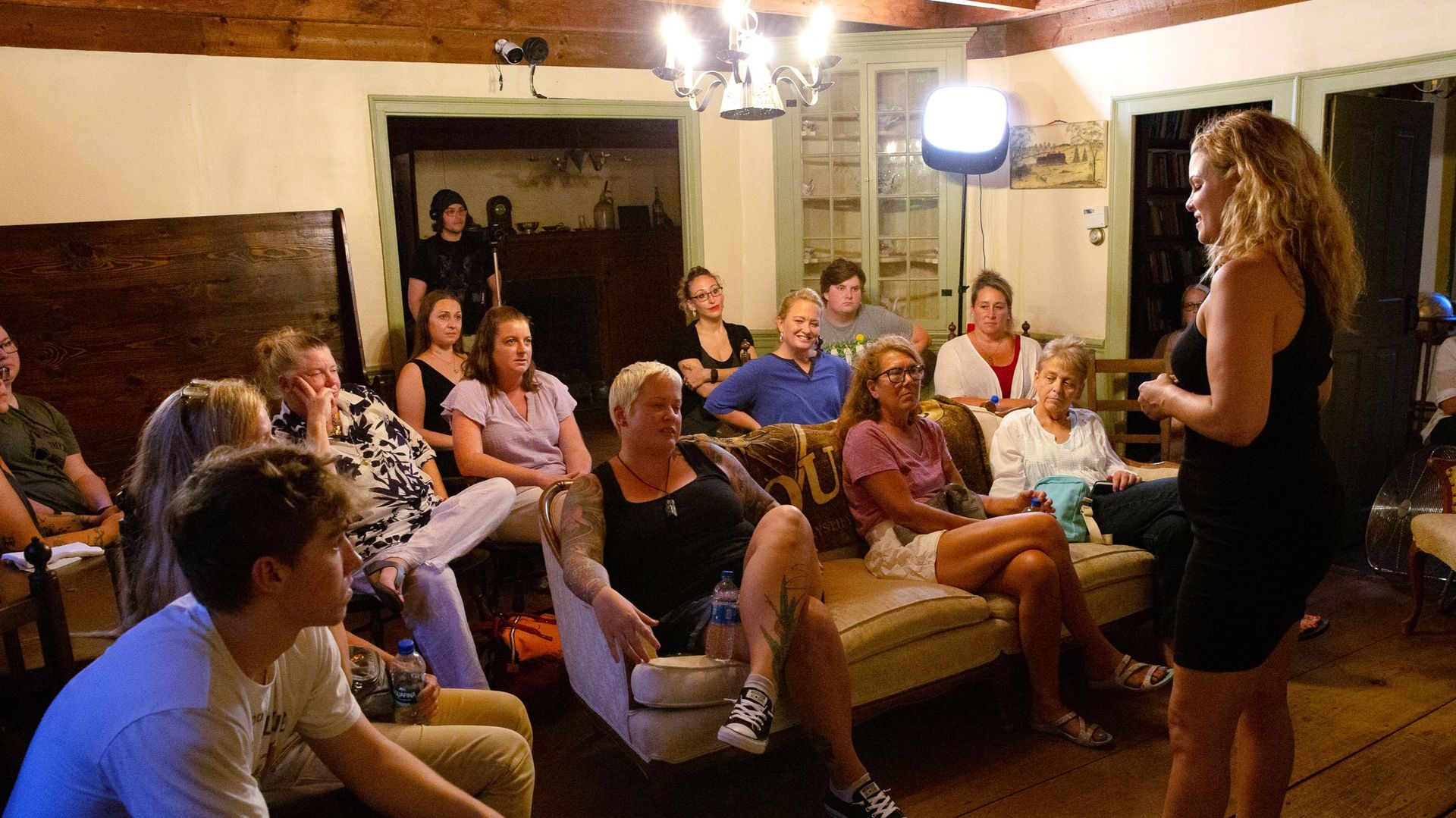
Paranormal investigators and content creators have visited the property and documented their own experiences there. These videos were independently produced by their respective creators and are not owned, produced, or endorsed by The Conjuring House — they’re shared here via YouTube’s embedded player, with full credit to each channel. See our Haunting page for the complete video showcase.
By Sam and Colby on YouTube
By grimmlifecollective on YouTube
By The Boys on YouTube
Yes. The Conjuring House is the modern name for the Old Arnold Estate, a real, privately owned farmhouse built in 1736 in Harrisville, Rhode Island. See our About the House page.
No. The 2013 film was not shot on location at the property. It dramatized the Perron family’s reported experiences while living in the real farmhouse during the 1970s, but the film itself was made elsewhere.
Jason Hawes, founder of TAPS (The Atlantic Paranormal Society) and Ghost Hunters, has secured ownership interests in the property, with the transaction still being finalized. He and his team lead its preservation and are planning its public tour program. See our History page for the full story.
Not yet. Guided tours are planned once the property is repaired. Contact us to be notified when tours open. See Tours & Events for planned tour types and what to expect.
Many visitors, tour groups, and paranormal researchers have reported activity on the property, which is considered by many to be one of the most haunted houses in the world. See our Haunting page for the full paranormal history.
Current priorities include structural stabilization of the original timber frame and foundation, upkeep of the grounds and outbuildings, and ongoing historical documentation, funded primarily through guided tours and direct visitor support. See our Preservation Mission page.
The property is located at 1677 Round Top Road in Harrisville, Rhode Island, a village within the town of Burrillville. The exact address will be shared once guided tours open to the public; see our Tours & Events page for updates.
Local tradition connects some of the property’s reported paranormal activity to native tribes historically tied to the land, dating back to the 1700s. This is part of the property’s oral folklore rather than documented land record, and is discussed alongside the rest of the property’s reputation on our Haunting page.
More questions? See our full FAQ page.
The full documented timeline, from 1736 construction to today.
Read the History →The family whose account of the 1970s inspired the film.
Read More →The property’s paranormal history and reputation.
Explore the Haunting →Ongoing structural stabilization and restoration priorities.
Read More →Planned tour options, what to expect, and how to get notified.
Plan a Visit →How the property is protected for the long term.
Our Mission →Once open, guided tours will be the only way to experience the real Old Arnold Estate in person.