1736 — Present
History of The Conjuring House
A documented timeline of the Old Arnold Estate, from its construction in 1736 to the worldwide movement that saved it and its modern recognition as The Conjuring House.
The Old Arnold Estate, internationally recognized today as The Conjuring House, is one of America’s most famous historic farmhouses.
Long before it became known as the Conjuring House, the property was the historic Old Arnold Estate, a working farm at 1677 Round Top Road in Harrisville — a village within the town of Burrillville, Rhode Island — with a history dating back to 1736. It is the real farmhouse that inspired the movie The Conjuring.
For a complete overview of the property, read our Complete Guide to The Conjuring House.
A Documented Timeline
Construction
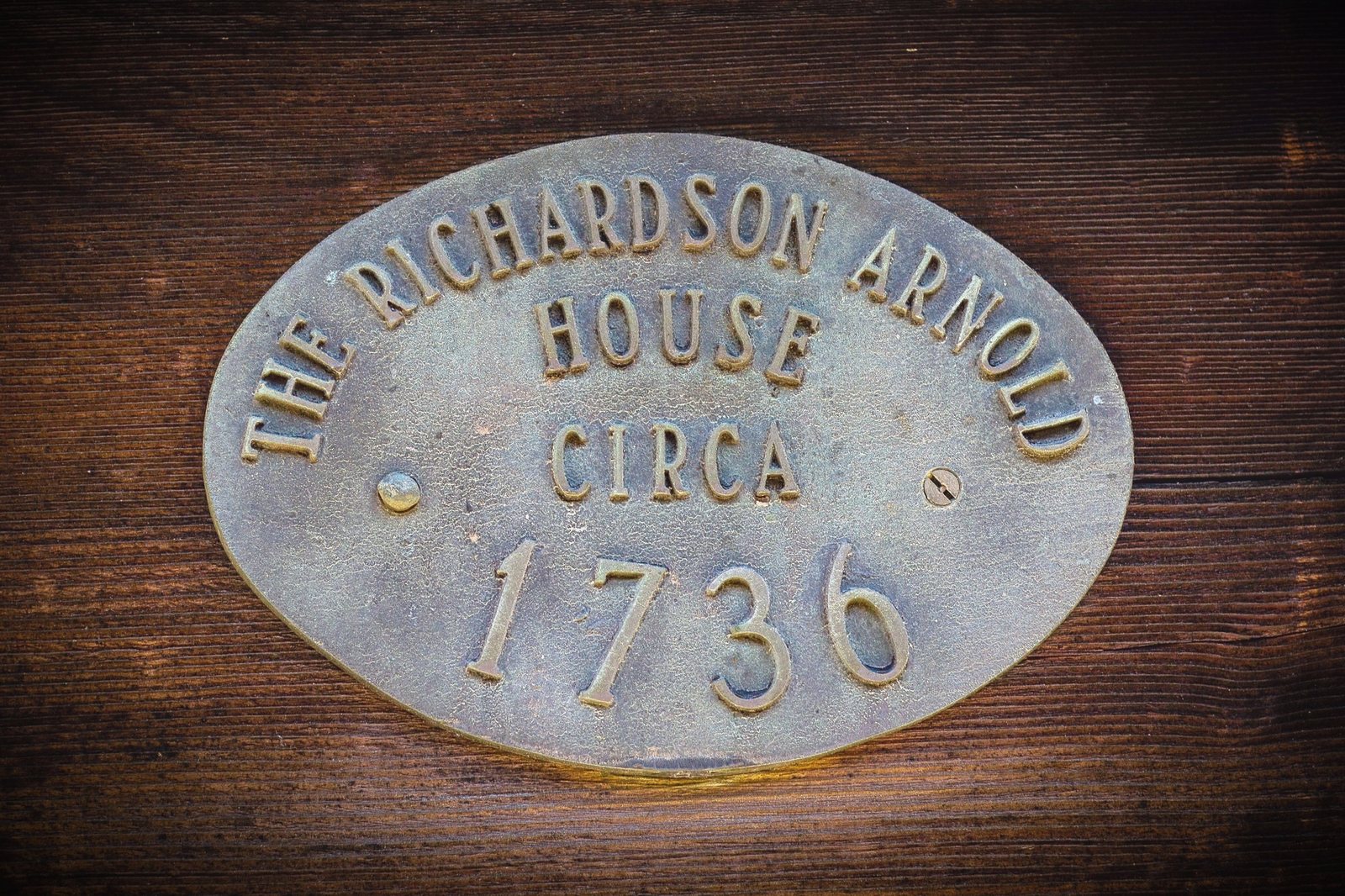
The farmhouse now known as The Conjuring House is built in Harrisville, Rhode Island, in the center-chimney style common to colonial-era New England homes. A period plaque mounted on the house today reads “The Richardson Arnold House, Circa 1736,” reflecting the families historically connected to its construction.
The Arnold Family Farm
For generations, the property operates as a working farm associated with the Arnold family, giving rise to its longtime local name, the Arnold Estate. Like many rural Rhode Island homesteads of the era, the family farmed the land and maintained the buildings that still stand today.
Changing Ownership and Local Folklore
Ownership of the farmhouse passes through several families over the following century. As with many old New England farmhouses, local oral tradition around the property grows over time. This site distinguishes documented history from folklore wherever the two diverge.
The Perron Family Years
The property becomes associated with the Perron family, whose accounts of their time in the house were later the basis for a widely seen horror film. This website addresses that history in the context of the physical property, independent of the film itself.
Recognition as “The Conjuring House”
Following the release of the film inspired by the Perron family’s accounts, the Old Arnold Estate becomes widely known by the public as “The Conjuring House.” The property itself, however, was not used as a filming location; the name refers to the real farmhouse that inspired the story.
A Worldwide Movement to Save the House
As the farmhouse’s long-term future came into question, word spread well beyond Rhode Island. Jason Hawes — founder of TAPS (The Atlantic Paranormal Society) and Ghost Hunters — helped bring together supporters from the paranormal research community and from historic preservation advocates with no connection to the paranormal field at all, uniting a worldwide following around a single goal: keeping the Richardson Arnold House standing, protected, and open to the public rather than lost. That shared effort led directly to Jason Hawes securing ownership interests in the property, with the transaction still being finalized.
Preservation and Public Tours
Jason Hawes and his team maintain the property and lead its preservation efforts while that ownership transaction is finalized, with guided tours planned for the public once the property is repaired, and this website operating as the official source for visiting information and verified history. See our Preservation Mission for details.
The Richardson-Arnold Family Line
The plaque on the farmhouse crediting “The Richardson Arnold House” reflects two families whose histories are intertwined on this land. Independent genealogical research traces the Richardson line in New England back to Isaac Richardson (born 1643 in Woburn, Massachusetts), whose descendants had settled in Glocester, Rhode Island, by the early 1700s. On November 20, 1762, Joseph and Isaac Richardson sold fifty acres — including the farmhouse and land that make up the property today — to Noah Arnold Sr., formally beginning the Arnold family’s ownership. The two families were also linked by marriage: Anne Richardson married Noah Arnold Jr. in 1768.
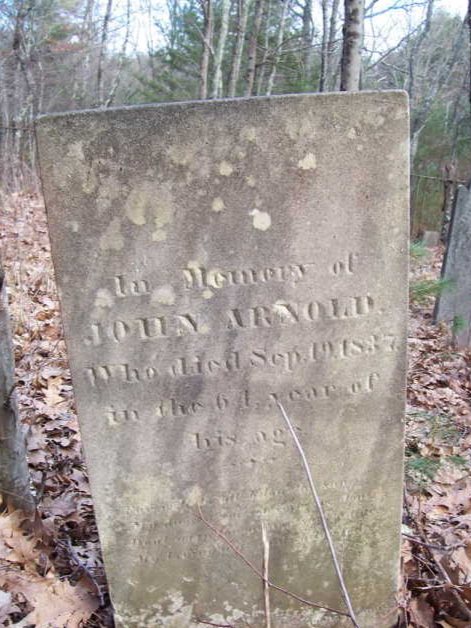
Arnold family ownership continued through several generations who lived on and farmed the land, including John Arnold (d. 1837) and his son Stephen Arnold, who died in 1849. Stephen’s son Edwin Arnold, born February 28, 1821, remained on the property until his disappearance on October 24, 1903; his body was found six weeks later, on December 17, 1903, on a neighboring farm, as reported at the time by the local Pascoag Herald.
This section summarizes publicly documented genealogical research rather than original research by this site. For the full family tree, source documents, and historical photographs, see the independent research published by J’aime Rubio at Deconstructing The Conjuring.
Documentation on the Property
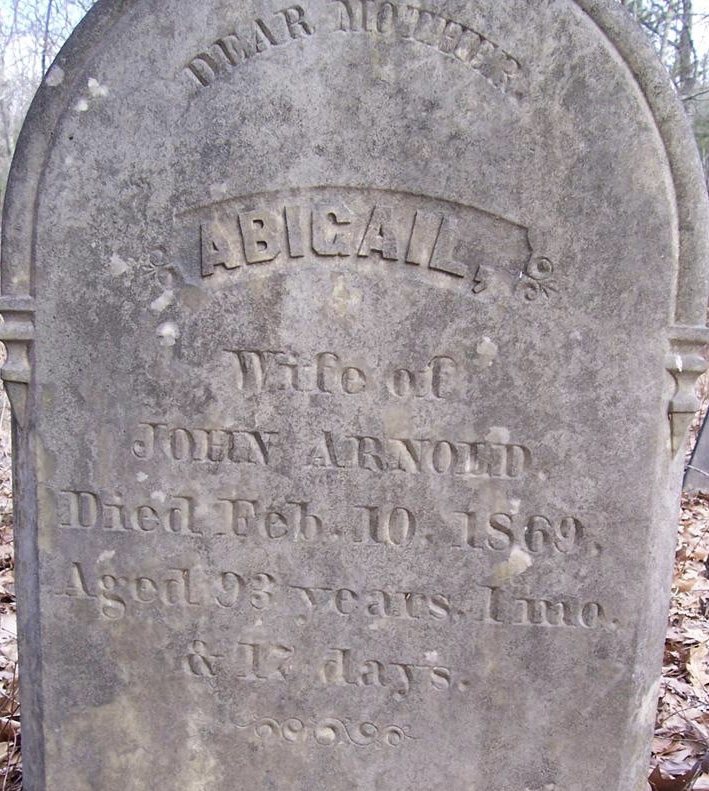
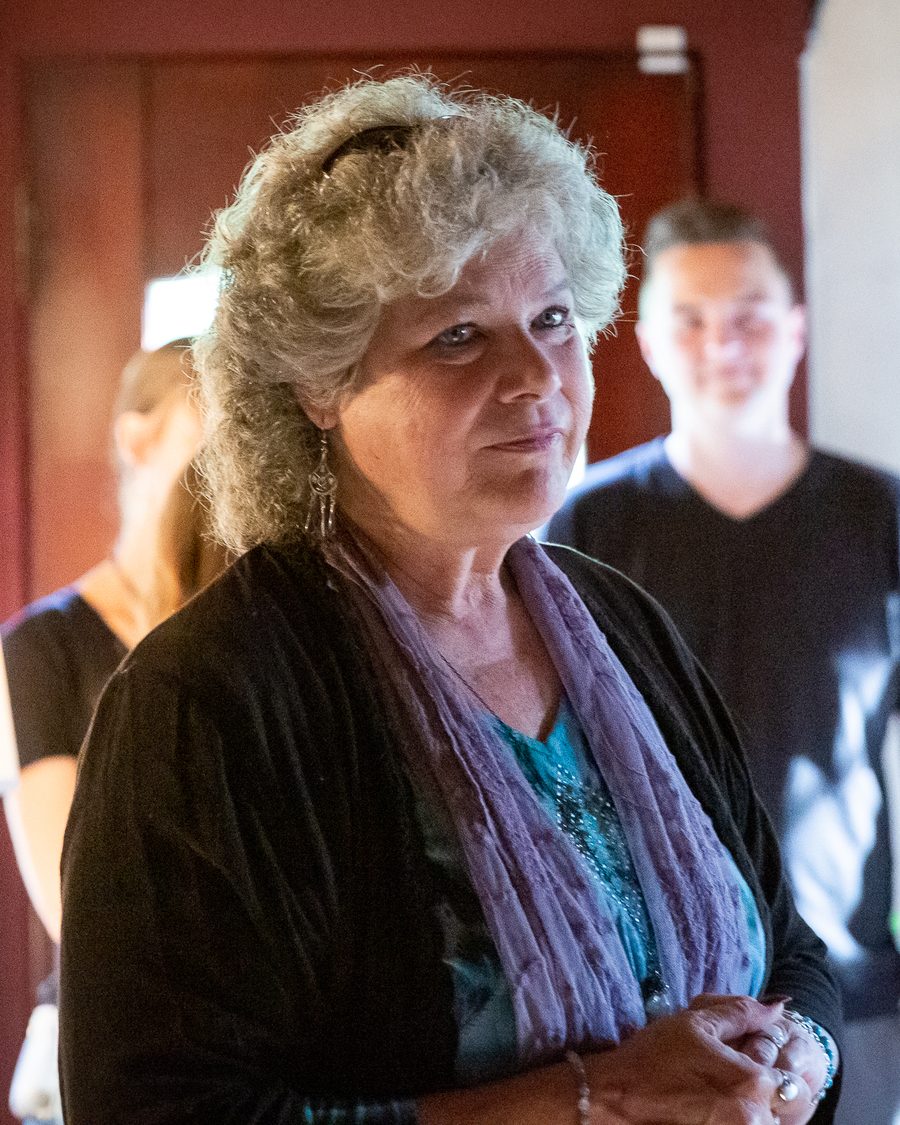
Two markers on the grounds directly support the timeline above: the “Richardson Arnold House” plaque affixed to the farmhouse, and period headstones in the small family cemetery on the property, both shown below. We also maintain a photograph connected to the Perron family, whose account of their time in the house is discussed above.
A Note on Sources
Rural New England properties of this age are documented through a mix of land and probate records, local histories, and oral tradition. Where this page describes folklore or family accounts rather than recorded fact, it says so directly. We update this page as we confirm additional documentation, and we welcome corrections from local historians and descendants of the families connected to the property — see our Contact page.
Frequently Asked Questions
A period plaque on the property reads “The Richardson Arnold House, Circa 1736,” reflecting the families historically connected to its construction. See our documented timeline above for details.
No. The property inspired the story behind the film, but the film itself was not filmed here. The name “The Conjuring House” refers to the real farmhouse, not a filming location.
It’s a period marker mounted on the farmhouse documenting its construction date and historical name, shown above alongside other documentation on the property.
Experience the History in Person
Guided tours of the rooms and grounds referenced in this timeline are planned once the property is repaired.